
Kenyan Coast travel guide
Best Beaches in Kenya: A Practical Kenyan Coast Comparison
Diani is the strongest all-round starting point for a first Kenyan beach holiday, Watamu is the better fit for reef and creek experiences, Nyali or Bamburi makes the easiest city-and-beach combination, Bofa and Tiwi favour quiet, and Shela offers the most distinctive island and cultural setting. None is best for everyone. The right answer depends on tide, swimming expectations, access, marine activities, vendor interaction, dining and how much transport you will tolerate.
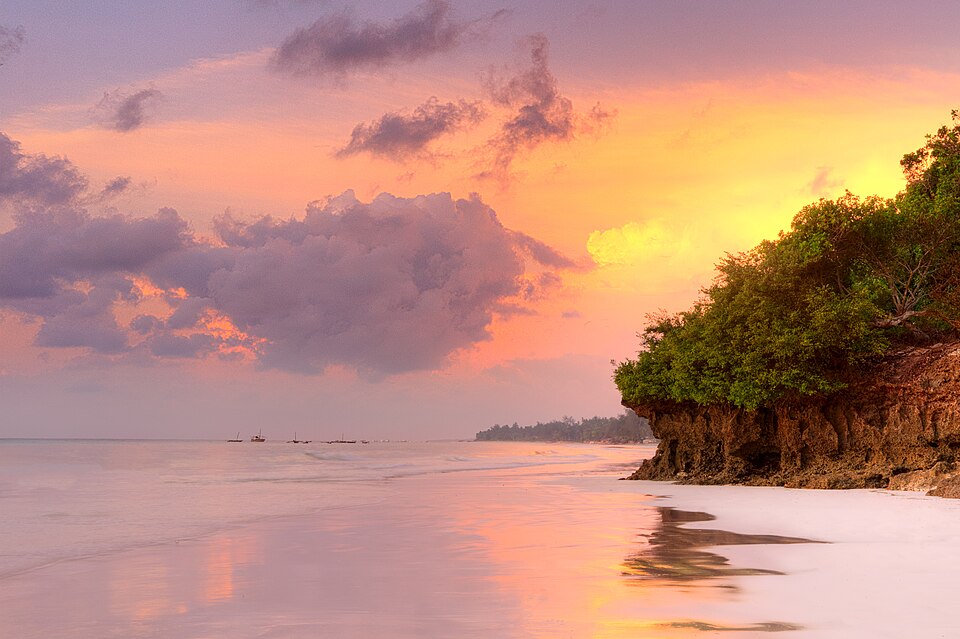
This guide compares beaches as real holiday bases, not a beauty contest. A beach can look exceptional at low tide but be awkward for swimming. A secluded villa can be peaceful but require a driver and stocked kitchen. A marine park nearby can improve snorkelling opportunities without making the sand outside every hotel part of the protected area.
Kenya's main beaches at a glance
| Beach or area | Best fit | What makes it different | Main limitation |
|---|---|---|---|
| Diani | First-time visitors wanting the broadest choice | Long resort corridor, many stay types, restaurants and activities | Spread out, strongly tide-dependent and regular vendor contact in some sections |
| Galu | Couples, kitesurfers and quieter south-Diani stays | Lower-density continuation south of central Diani | Fewer walkable services and longer rides to central restaurants |
| Tiwi | Villa groups and quiet self-contained stays | Less developed coast north of Diani | Limited dining, transport and current independent beach information |
| Nyali | Travellers combining Fort Jesus and city dining with sand | Closest practical beach base for central Mombasa visits | Urban surroundings, variable weekend crowds and a narrower beach at high tide in places |
| Bamburi and Shanzu | Families and resort-led stays | Established north-coast hotels and access to Mombasa Marine Park activities | Property-led experience, vendors in some sections and longer city journeys from Shanzu |
| Watamu bays | Reef, marine life, families and scenic variety | Several bays, marine park, Mida Creek and nearby Gede | Low tide changes the bays dramatically; water access is not identical everywhere |
| Malindi and Casuarina | Town services, history and marine access | Urban coast plus a protected marine area to the south | Beach condition varies sharply by frontage and season |
| Bofa, Kilifi | Long walks, retreats and low-density beach time | Spacious ocean beach beside a creek-focused destination | Fewer services, specific access routes and a separate trip to creek activities |
| Shela, Lamu | Swahili heritage plus a long island beach | Boat-based setting, Old Town access and dhow culture | Flight, boat and porter logistics plus nationality-specific travel advice |
The quick answer by traveller type
| Traveller priority | Start with | Why | Verify before booking |
|---|---|---|---|
| Easiest first beach holiday | Diani | Greatest range of stays, meals and activities | Exact section, tide, transfer and street-versus-beach access |
| Snorkelling and reef interest | Watamu | Marine park and multiple reef-linked experiences | Park boundary, operator, conditions, equipment and fee |
| City sights plus beach | Nyali or Bamburi | Practical reach of Mombasa Island and north-coast services | Traffic, hotel frontage and real journey to Old Town |
| Quiet villa holiday | Tiwi or Bofa | Lower-density setting | Cook, groceries, driver, beach route, power and water |
| Kitesurfing | Galu or southern Diani | Established schools and seasonal wind use | Instructor, equipment, insurance, launch site and wind forecast |
| Culture plus beach | Shela or Mombasa north coast | Lamu Old Town or Mombasa heritage can anchor the trip | Boat or city transfer, dress, walking and advisory context |
| Young family | Carefully selected Diani, Watamu or Bamburi property | Pools, meals and organised services can reduce friction | Child-safe room, shade, water conditions, food and transfer length |
| Solo social trip | Diani, Watamu or Kilifi | Hostels, lessons and group activities | Event noise, known transport and operator credentials |
| Post-safari rest | Diani, Watamu or Mombasa north coast | Practical air, SGR or road combinations | Full door-to-door route, not just nearest airport on a map |
Before choosing: five facts most beach rankings omit
1. A destination name can cover many different shorelines
“Diani” can mean a central restaurant-and-resort zone or a quieter southern stay closer to Galu. “Watamu Beach” may refer loosely to several bays with different rock formations, tide exposure and access. “Malindi beachfront” can mean an urban section or a property nearer Casuarina and the marine park. Always inspect the exact map pin and recent photographs of the actual frontage.
2. Low tide is not a bad beach, but it may be the wrong swimming beach for you
Reef-protected sections of the Kenyan coast can change dramatically through a tide cycle. Low water may expose reef flat, seagrass, pools, coral rubble and long walks to deeper water. Higher water can improve swimming in one place and reduce sand width in another. Wind, waves and current remain separate factors.
Ask what the exact frontage is like at the times you expect to swim. A hotel saying “swimmable beach” is incomplete without the tide and safe entry point.
3. A public beach and private hotel facilities are different things
Access to the shore does not automatically include a hotel's sunbed, shade, toilet, shower, pool or security. Some properties sell day access or allow restaurant guests to use selected facilities; others do not. Confirm the current rule and total spend before arriving.
4. A marine park is not the same as the beach outside the room
Kenya Wildlife Service manages several distinct protected areas along the coast, including Mombasa, Watamu, Malindi, Diani-Chale and Kisite-Mpunguti. Their boundaries, fees and permitted activities differ. A resort may use “marine-park area” as broad location language even when a boat transfer is needed to reach the snorkelling site.
Kisite-Mpunguti, for example, is reached through the Shimoni seascape and is not simply the water in front of central Diani. KWS describes Kisite Marine National Park as a fully protected no-take zone and Mpunguti Marine National Reserve as allowing controlled artisanal fishing and low-impact tourism. Ask the tour provider which protected area and legal zone the activity actually enters.
5. Visitor contact on the sand differs by section and day
Beach vendors, informal guides, camel handlers and excursion sellers are part of the experience in several busy areas. Some visitors enjoy the conversations and book locally; others report that repeated approaches make it hard to relax. One account cannot label an entire community. It can tell you to decide how much interaction you want, give a polite and firm no when needed, and verify any booking independently.
1. Diani Beach: best all-round choice for a first visit
Diani is the most versatile Kenyan beach base. The long corridor supports full-service resorts, small hotels, villas, apartments, restaurants, supermarkets, diving, kitesurfing and excursions. Ukunda Airport can simplify a domestic flight connection, while a road or SGR arrival through Mombasa requires a south-coast transfer.
Central Diani suits travellers who want dining and services within a shorter tuk-tuk ride. The southern sections shade toward a quieter Galu experience. The destination is still spread out. “Diani Beach Road” is not a compact high street, and two properties carrying the same location label can be far apart.
A December 2025 group visitor praised Diani's clear water, white sand, beach walks, swimming and range of activities. An August 2026 visitor also described a quiet beach and enjoyed walking and water activities. The limitations appear just as clearly. A March 2026 couple liked the long white sand and warm sea but found repeated vendor approaches intrusive and said low tide restricted swimming. An August 2026 hotel guest reported sea urchins and other marine hazards on the exposed shallows and felt swimming was much easier at high tide on that section.
Do not turn those reports into “Diani is calm” or “Diani is unsafe at low tide.” They describe different dates and locations. Ask the property about its exact safe entry, borrow or pack suitable reef shoes only if locally recommended, and never handle or step on marine life. Decline sales firmly, then verify excursions through a licensed or accountable operator.
Source: Diani Beach visitor reports.
Read the Diani travel guide to choose the right section, and the Diani accommodation guide before comparing properties.
Galu: choose it for less density, not complete isolation
Galu is the quieter southern continuation of the wider Diani holiday area. It suits couples, kitesurfers and travellers content with their property or a small group of nearby venues. Wind and launch conditions are seasonal, so choose a qualified school and ask whether the lesson begins from the beach outside your stay or another site.
The trade-off is access. A room saving money or offering more quiet may increase every dinner ride. Confirm tuk-tuk availability after dark, distance to a supermarket, restaurant days off and whether the road or beach is the practical daytime walking route.
2. Watamu: best for marine and creek experiences
Watamu is not one continuous, uniform swimming beach. Watamu Bay, Turtle Bay, Blue Lagoon, Garoda and other named sections change around headlands, reef, channels and sandbars. That variety is the appeal. It is also why a generic “Watamu beachfront” description is inadequate.
Choose Watamu when snorkelling, diving, reef ecology, Mida Creek, Gede and Arabuko-Sokoke matter as much as lying on sand. Read the Watamu travel guide and the Watamu Marine National Park guide before booking a boat.
An October 2025 visitor praised fine white sand, shifting turquoise water, sandbars and natural pools. A January 2026 group described a clean, appealing beach setting. Other reports show the trade-offs. A February 2026 couple thought the view was beautiful but found swimming difficult at low tide. A March 2024 family enjoyed their overall stay while reporting heavy seaweed at high tide during the period and too many intrusive approaches on the beach. An October 2025 visitor also saw plastic on part of the shore.
The correct takeaway is variation. Tide can create remarkable walking and wildlife-viewing conditions while frustrating a swimmer. Seaweed and plastic can affect one frontage or period without defining every bay. Ask the hotel for recent, unedited frontage photographs, current seaweed conditions, actual route to deeper water, and where a KWS fee applies.
Source: Watamu Beach visitor reports.
3. Nyali: best for Mombasa sights plus a beach base
Nyali is the practical choice when the trip includes Fort Jesus, Old Town, city restaurants, shopping or business. It lies north of Mombasa Island across Nyali Bridge and combines residential, retail and hotel areas. It feels more urban than Diani, Bofa or Shela.
The actual shore varies by access point. A July 2026 solo traveller called Nyali beautiful and convenient but found it touristy and somewhat crowded, and observed that high tide covered much of the sand on the section visited. A May 2026 group visitor loved the soft sand and afternoon breeze but said the public beach was heavily crowded on a weekend compared with resort-access sections. An October 2025 friends trip described clear, calm water on the day and liked the nearby food options.
These experiences explain why day and access matter. Weekend activity can be part of an enjoyable local beach atmosphere or conflict with a visitor seeking silence. High tide may improve water depth while reducing dry sand. Ask a property whether non-guests can buy a day pass, exactly what it includes, and whether the beach access remains open at the planned return time.
Source: Nyali Beach visitor reports.
For area and hotel comparisons, use where to stay in Mombasa.
4. Bamburi and Shanzu: best for an established north-coast resort stay
Bamburi has a lively resort and public-beach character with water activities, restaurants and access to Haller Park. It can work well for families who want a pool, meal plan and organised entertainment while remaining within reach of Mombasa. Shanzu lies farther north and often feels more property-led and contained.
A March 2026 couple at Bamburi praised the long beach, hotels and restaurants. A May 2025 solo visitor described a wide, colourful beach and memorable camel encounters but noted that waves could become strong depending on the hour. The reports are not exact tests of every frontage, and some entries on the general beach page describe hotel service more than the public shore.
That mixing is itself a warning. Review platforms may group beach, hotel and tour experiences on one attraction page. Inspect whether a comment concerns the same access point you will use. Ask about vendors, water-sports traffic, camel route, tide, room block and the journey to Mombasa Island.
Source: Bamburi Beach visitor reports.
Choose Shanzu when the resort is intended to carry most of the holiday. It is less convenient for daily Old Town visits. Confirm the actual sand access, neighbouring property sound, whether restaurants admit non-guests and the complete after-dark transfer.
5. Tiwi: best for a deliberate, self-contained quiet stay
Tiwi lies north of Diani and is much less developed as a visitor corridor. It suits a villa group, repeat coast traveller or couple who understands that quiet often means fewer restaurants, fewer drivers waiting nearby and more responsibility for food and utilities.
Rock pools and reef formations are often promoted, including a feature commonly called the African Pool. Do not walk to a tidal formation from an unverified pin or social-media video. Tide, reef surface, waves and return route matter, and no natural pool is automatically safe. Use a responsible local guide who explains footwear, tide and wildlife conduct without handling animals.
Current independent beach-level evidence is thinner than for Diani or Watamu. That is not proof that Tiwi is better or worse. It means the property has to supply more of the decision evidence: recent frontage video at low and high tide, exact public access, drinking water, cook and grocery plan, power and water backup, nearest open restaurant, driver and emergency contact.
Choose Tiwi over central Diani only when self-containment is part of the appeal. A daily trip south for every meal defeats the advantage.
6. Bofa Beach, Kilifi: best for open space and a slower north-coast stop
Bofa is a long open-ocean beach north of Kilifi Creek. It suits beach walks, retreats and low-density stays. It does not put you on Kilifi Creek, and a property on Bofa Road may still use a public path, steps or a short drive to the sand.
Recent reports tied to the Bofa area praise the quiet and space on particular stretches. April 2026 family reports about one local property, however, described leaking tent accommodation and weak service while still praising some frontline staff. Those are property reports, not a criticism of the beach. They show why a beautiful location cannot substitute for room-condition and service checks.
For beach planning, ask about direct access, shade, toilets, food, safe swimming, seaweed and the return driver. For a hotel or tented stay, ask for current room photographs, rain protection, water, maintenance and all charges. Do not treat the word “resort” as proof of private sand or full facilities.
Source: Bofa area and property visitor reports.
The Kilifi travel guide explains Bofa versus creek accommodation and how to cross between them.
7. Malindi and Casuarina: best for town, heritage and marine access
Malindi's appeal is broader than its central beach. The destination combines town services, museums and Swahili history with resort pockets and a marine protected area toward Casuarina. Beach quality and swimming access vary substantially along the coast.
The KWS Malindi Marine Protected Area plan describes coral-sand shore, exposed sand and seaweed patches at low tide, shallow pools, channels, reefs, seagrass, mangroves and mudflats. That environmental variety should not be reduced to “clear turquoise beach.”
A March 2026 couple disliked the central Malindi section they visited because of rubbish and heavy seagrass, but said the shore improved farther along near a rockier Silversand section and preferred a separate Jacaranda Bay visit. An August 2025 group also reported seaweed and run-down beachfront businesses in the area they saw. These are subjective reports about specific sections and dates, not a claim that Malindi's entire coast is dirty.
If beach swimming is the priority, ask for current photos of the property's exact frontage and compare Casuarina or a day at a different bay. If history, restaurants and airport convenience matter too, Malindi can still be the stronger base. Read the Malindi travel guide for that combined decision.
Source: Malindi visitor reports.
8. Shela Beach, Lamu: best for culture and island atmosphere
Shela is the most distinctive choice in this list because the beach is only one part of a boat-and-walking trip linked to Lamu Old Town. Most visitors fly to Manda Airport, cross by boat and complete the arrival on foot. Government travel advice for Lamu differs by nationality and can affect insurance, so read the current advisory and the Lamu travel guide before booking.
A February 2024 couple praised the long, quiet sand and warm, clear water. A September 2022 visitor enjoyed the natural beach and absence of heavy commercialisation, while another visitor that month described a beautiful but exposed long walk. A December 2024 couple liked Shela itself but said sandflies caused severe irritation during their stay.
The reports do not predict water, insects or solitude on a future date. Ask the accommodation about recent sandflies, tide, current, safe swimming away from the channel edge, shade and the realistic walking distance. Carry water and sun protection before a long beach walk, and do not rely on an unconfirmed boat pickup for the return.
Source: Shela Beach visitor reports.
Marine activities: choose the legal area and operator, not a beach seller's promise
Kenya's protected coast supports snorkelling, diving, boat trips and wildlife viewing, but the experience depends on season, sea state, visibility and conduct. Wildlife is never guaranteed. “Swimming with dolphins” in a product title does not justify chasing or crowding animals.
KWS guidance for Kisite-Mpunguti tells visitors to check local sea and weather conditions, avoid damaging or removing coral and shells, not buy marine-life souvenirs, carry litter out, avoid feeding fish and follow responsible dolphin and whale watching. Apply those principles throughout the coast.
| Question for an operator | Why it matters |
|---|---|
| Which named park, reserve or unprotected site will we enter? | Establishes the legal area, fee and activity rules |
| Is KWS entry included, and how will payment be documented? | Prevents a surprise charge or unclear cash collection |
| Who owns and commands the boat? | Creates accountability for vessel and route |
| Are correctly sized life jackets provided for every passenger? | Adult equipment does not protect a small child correctly |
| What is the passenger capacity and the number booked? | Overcrowding changes comfort and safety |
| What cancels or changes the trip? | Wind, visibility and sea state should control the plan |
| How are dolphins and turtles approached? | Wildlife viewing must avoid chasing, touching, feeding and crowding |
| Is snorkelling instruction and surface supervision provided? | Swimming ability and current vary |
| What is the emergency and communication equipment? | A phone alone may not cover every route |
How season, tide and seaweed should change the choice
Use the Kenya Meteorological Department for current forecasts, then ask the property and operator about the specific frontage. A monthly climate average cannot tell you whether today's boat should leave.
| Variable | What it changes | What to ask |
|---|---|---|
| Tide | Beach width, reef exposure, walking route and swimming depth | At what local times is the usual entry practical during my dates? |
| Wind | Kite conditions, small-boat comfort, waves and exposed-beach feel | Which activities suit the forecast and what is cancelled? |
| Rain | Road access, outdoor meals, visibility and room humidity | What is the indoor fallback and cancellation policy? |
| Seaweed | Appearance, smell, walking and shallow-water access | Is it present on this exact frontage now, and how is natural deposition handled? |
| Current and shore break | Safe entry and return | Where do qualified staff advise guests to swim today? |
| Marine life | Reef interest and hazards | What must visitors avoid touching or stepping on? |
Seaweed is natural habitat and can move with season, wind and tide. Mechanical clearing may not be environmentally appropriate in every protected or nesting area. Ask how a property manages it, but do not assume that a groomed beach is ecologically better.
Access, day passes and the true cost of quiet
A free public beach day may still require tuk-tuk fares, shade, food, toilets and secure storage. A hotel day pass can solve some needs but may have an advance reservation, minimum spend or restricted pool use. A remote villa may be good value per person while adding a cook, groceries, drinking water and a full-time driver.
| Beach-day model | Likely advantages | Costs or limits to uncover |
|---|---|---|
| Public access point | Local atmosphere and no resort admission | Shade, toilets, belongings, food, vendor interaction and return transport |
| Hotel day access | Facilities, restaurant and a defined base | Reservation, minimum spend, pool limits, towel and security rules |
| Beachfront hotel stay | Convenient repeated access | Room may be far from sand; facilities remain property-specific |
| Villa or private house | Space and group privacy | Staff, groceries, utilities, driver and beach path |
| Guided marine day | Equipment, route and interpretation | Park fee, boat standard, wildlife conduct and cancellation |
Ask for the complete cost in writing. Do not send money to a changed mobile number or personal account until the hotel or operator confirms it through an independently verified contact.
Which beach works best after a safari?
Choose by the complete safari-to-room route. A short-looking line on a map can involve a distant airstrip, ferry or bypass, city traffic and another hour to the property. A direct flight on the right day may make Watamu or Diani easier than a geographically closer but poorly connected stay.
| Safari finish or connection | Coast shortlist | Planning issue |
|---|---|---|
| Nairobi by domestic flight | Diani via Ukunda, Watamu or Malindi via Malindi, Mombasa via Moi | Departure airport, baggage, live route and final road transfer |
| Nairobi by SGR | Mombasa north coast, then Kilifi or Watamu by road if desired | Mombasa Terminus is in Miritini, not beside a beach |
| Tsavo by road | Mombasa north coast, Diani or Kilifi depending on gate and next route | Park gate, traffic, driver hours and arrival before dark |
| Maasai Mara charter or scheduled service | Any beach with a compatible live flight and acceptable final transfer | Airstrip, operating day, baggage and whether the ticket is protected |
| Amboseli | Compare road to Mombasa with an air connection | A long road day may erase one beach night |
Do not choose a beach only because a tour operator says “easy safari extension.” Ask for every vehicle, airstrip, flight, wait and luggage handoff.
Families, swimming, accessibility and solo travel
Families
The best family beach is attached to the right room, pool, food and transfer for that child. Ask about balcony gaps, connecting-room security, shaded shallow pool, highchairs, fridge, medical help, child-sized life jackets and car seats. A reef-protected horizon does not guarantee a safe toddler entry.
Strong swimmers and non-swimmers
Swimming ability does not remove current, tide, boat traffic or reef hazards. Non-swimmers can still enjoy a marine trip only if the operator provides proper flotation, clear supervision and a safe alternative to entering the water. Never accept pressure to snorkel because the boat has already left.
Limited mobility
“Beachfront” may involve steps, sand, a steep path or no firm route for a wheelchair. Ask for video from vehicle to room, restaurant, pool and sand, plus step count, handrails, shower entry and suitable toilet. A beach wheelchair is useful only if it exists, fits and has help available.
Solo travellers
Choose a known driver for after-dark returns and tell the accommodation before an independent beach or boat outing. If unwanted sales attention occurs, decline clearly and move toward a staffed venue. One negative review should not be used to judge an entire place or community, but repeated reports justify planning how to handle approaches.
Responsible beach behaviour
- Do not stand on coral or remove shells, starfish or other marine life.
- Do not buy coral, shells or wildlife products as souvenirs.
- Never touch, feed, chase or crowd dolphins and turtles.
- Keep distance from nests and follow conservation staff instructions.
- Carry rubbish out and reduce single-use plastic.
- Use reef-safe practices and rinse products away from the sea where possible.
- Ask before photographing residents, fishers, guides or children.
- Dress for the beach on the beach, then cover appropriately in towns and villages.
- Use licensed or accountable guides and insist on safety equipment.
- Report sewage, wildlife harm or unsafe commercial conduct to the relevant property or authority with exact location and evidence.
A decision checklist before booking any Kenyan beach
| Category | Confirm in writing |
|---|---|
| Exact place | Map pin, named beach or bay, and whether the room is on the creek, channel or ocean |
| Access | Public path, hotel gate, stairs, road crossing and distance from room to sand |
| Tide and swimming | Low- and high-tide experience, advised entry, currents and on-site guidance |
| Current condition | Recent unedited photographs, seaweed, works, erosion, pool or restaurant closure |
| Room | Category, cooling, mosquito protection, sound, bathroom and steps |
| Facilities | Shade, loungers, towels, toilet, shower, pool and whether each is included |
| Meals | Board basis, current menu, dietary needs, kitchen hours and taxes |
| Transport | Airport or SGR pickup, final road, late return, luggage and complete fare |
| Activities | Named operator, licence or credentials, equipment, park fee and weather policy |
| Terms | Deposit recipient, cancellation, refund timing and disruption policy |
Frequently asked questions
Which is the best beach in Kenya overall?
Diani is the strongest all-round answer for a first visitor because it combines a long beach with the broadest range of accommodation, food and activities. Watamu can be better for reef and creek experiences, while Shela, Bofa, Tiwi and Nyali serve different priorities.
Which is better, Diani or Watamu?
Choose Diani for a longer resort corridor, more accommodation and dining choice, kitesurfing and convenient Ukunda flights. Choose Watamu for compact bay variety, a marine-park focus, Mida Creek and nearby Gede. Both are tide-dependent and vary by exact frontage.
Which Kenyan beach is best for swimming?
No entire destination is always best. Safe, convenient swimming depends on the section, tide, wind, current, reef and day. Ask the property where staff advise guests to enter during your dates and never infer safety from clear or calm-looking water.
Which beach is best for families?
A carefully selected Diani, Watamu or Bamburi property is a practical starting point because pools, meals and activities can be organised. The final choice should turn on child-safe rooms, shaded areas, food, medical access, water conditions and transfer length.
Which beach is closest to Mombasa attractions?
Nyali is the most practical beach base for repeated trips to Mombasa Island, with Bamburi also workable. Traffic still affects every journey, and Shanzu is farther north. Staying on the island may be better for a short heritage-first trip.
Where is the quietest beach?
Tiwi and Bofa are strong quiet-stay candidates, and Galu is usually lower density than central Diani. Quiet depends on weekends, neighbouring events, room position and access point. Ask about the exact dates instead of relying on an area reputation.
Where is the best snorkelling?
Watamu Marine National Park and trips to Kisite-Mpunguti are major options, with Mombasa and Malindi marine protected areas also relevant. Choose by live sea conditions, responsible operator, legal zone and travel time. Wildlife and visibility cannot be guaranteed.
Is Shela Beach safe to add to a first trip?
That decision requires current travel advice for your nationality, insurance confirmation and flight-and-boat planning. Advice can distinguish islands from mainland areas and differs among governments. The Lamu travel guide explains the decision without making a universal safety claim.
Do Kenyan beaches have private sections?
Hotels may control their facilities and the route through private property, while the legal status of the shore and public access is a separate matter. Never assume a daybed, toilet or pool is public. Ask the establishment what non-guests may use and on what terms.
Are seaweed and beach vendors a problem everywhere?
No. Both vary by place, season, tide, access point and day. Visitor reports identify possible friction but cannot predict your stay. Ask for current frontage evidence and choose a staffed facility if repeated approaches would substantially affect the holiday.
Final recommendation
For a first Kenyan coast holiday focused mainly on sand and easy choice, start with Diani. Choose Watamu when marine ecology and varied bays matter more than all-day swimming outside one room. Use Nyali or Bamburi when Mombasa's heritage and city services remain central. Choose Bofa or Tiwi deliberately for quiet and self-containment, not because a short list calls them “hidden gems.” Choose Shela when you want the beach to sit inside a larger Lamu cultural and boat journey.
Whichever beach wins, verify the exact frontage at both tide states, the real room-to-sand route, current seaweed or works, safe water guidance, visitor contact, transport and total price. That evidence will improve the trip more than any universal top-ten ranking.
Send a correction or report a material change.
Affiliate disclosure
Mombasa Rentals may earn a commission if you book through some links on this page, at no extra cost to you. Affiliate relationships do not determine which beaches are included, how visitor reports are represented or what limitations we explain. No affiliate booking links will be added until the relevant programme approves the website.